
A new US$42 million funding partnership has been launched to accelerate implementation of Africa’s flagship science strategy, marking a significant step toward strengthening research and innovation systems across the continent.
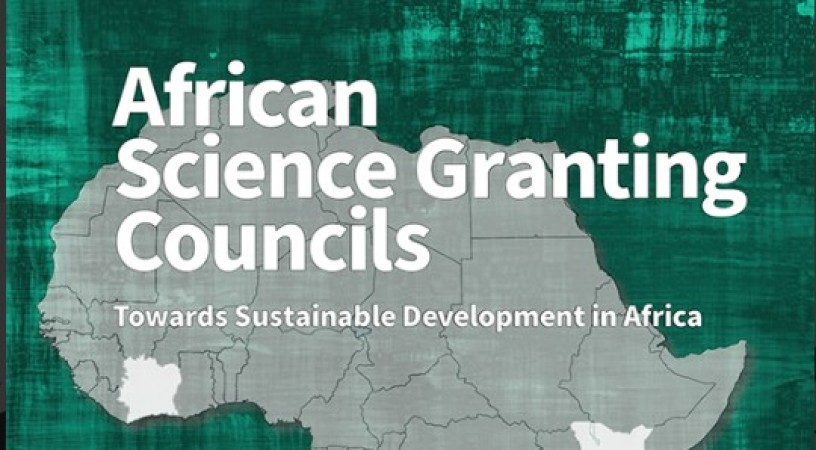
The funding was announced on 10 February during Africa Science Week in Addis Ababa, held alongside the annual African Union summit. The investment will support the third phase of the Science Granting Councils Initiative (SGCI), a coalition of 20 sub-Saharan African research funders established in 2015 to strengthen national science funding bodies.
The new phase of SGCI will explicitly support implementation of the Science, Technology and Innovation Strategy for Africa (STISA) 2034, a continent-wide 10-year plan endorsed by African heads of state. The strategy aims to position science, technology and innovation (STI) as central drivers of sustainable economic growth and development.
Africa Science Week 2026 brought together policymakers, researchers and development partners to operationalise the STISA-2034 implementation plan, which focuses on strengthening institutional frameworks, investing in human capital and mobilising financing for science programmes.
The $42 million package comes from a consortium of international and African partners, including:
- Canada’s International Development Research Centre
- The Government of Norway
- The UK’s Foreign, Commonwealth & Development Office
- The Wellcome Trust
- Germany’s German Research Foundation
- South Africa’s National Research Foundation
In a statement, the International Development Research Centre said the investment builds on commitments made by SGCI members last September to deepen collaboration with the African Union and strengthen Africa-led science systems.
Despite welcoming the new funding, Blade Nzimande, South Africa’s minister of science, technology and innovation, urged African governments to increase domestic financing for the strategy.
“African countries need to step up to the plate,” Nzimande said at the launch, warning that failure to invest adequately would leave the continent dependent on external partners — a vulnerability exposed during the Covid-19 pandemic when Africa lagged in access to vaccines.
The full implementation cost of STISA-2034 is estimated at $6.8 billion, underscoring the scale of resources still required.
STISA-2034 targets five priority sectors: Agriculture, Health, Information and communication technologies, Energy and Environment
The strategy will roll out in two phases. The first five years will concentrate on building infrastructure, regulatory systems and research capacity needed to support STI programmes, including plans for a dedicated African research fund.
The creation of a continental research fund has been under discussion at African Union level for nearly two decades but has yet to materialise, largely due to funding constraints and limited political momentum.
If successfully implemented, the strategy is expected to strengthen Africa’s scientific capacity, support innovation-driven industries and reduce the continent’s long-standing dependence on external technology and research systems.
Photo courtesy / Teboho Moja and Smuel Kehinde
Comment