
African universities have maintained their presence on the global academic stage, with 135 institutions from 19 countries featured in the Times Higher Education (THE) World University Rankings 2026, released on October 8, 2025.
The new rankings reveal a story of both progress and persistence, as several institutions strengthened their global standing while others slipped amid growing international competition and persistent funding challenges.
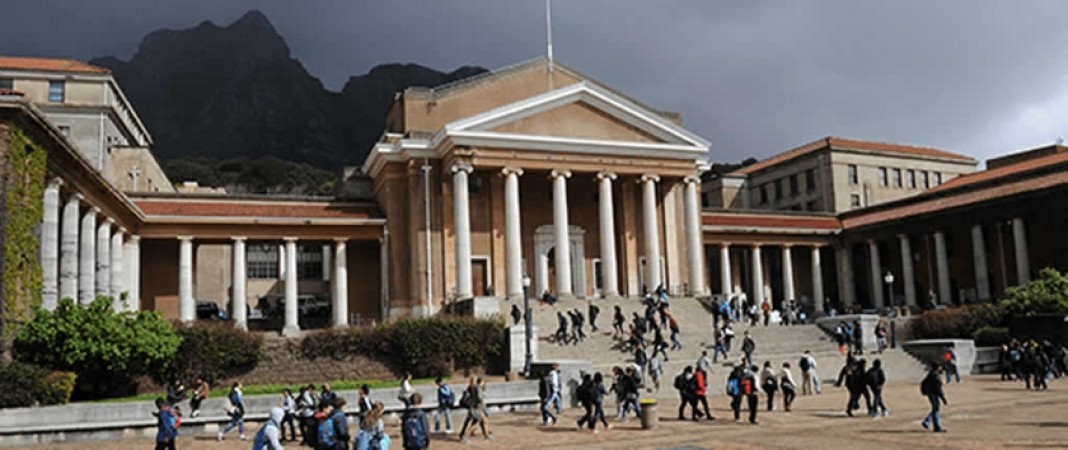
South Africa’s University of Cape Town (UCT) once again emerged as Africa’s highest-ranked university, climbing from 180th to 164th place worldwide. This places UCT among the top 7.5% of the world’s 2,191 ranked universities, underscoring its leadership in research, academic influence, and international collaboration.
UCT remains the only African institution in the global top 200, further cementing its reputation as a hub for excellence and innovation.
Trailing UCT are Stellenbosch University and the University of the Witwatersrand (Wits), both securing positions in the 301–350 band. Morocco’s Mohammed VI Polytechnic University and the University of Johannesburg rounded out Africa’s top five, each ranked within the top 400 globally.
Egypt maintained a strong numerical presence with 36 universities featured in this year’s rankings, followed by Algeria (28), Nigeria (25), and South Africa (13). Despite having fewer institutions overall, South Africa’s universities continued to dominate the upper tiers, accounting for eight of Africa’s top 10 universities.
Rounding out the continent’s top performers are the University of KwaZulu-Natal, University of Pretoria, American University in Cairo, Egypt-Japan University of Science and Technology (E-JUST), and Kafrelsheikh University in Egypt.
At the global level, the University of Oxford retained its top spot for the ninth consecutive year, followed by the Massachusetts Institute of Technology (MIT) and Harvard University. Princeton University achieved its best-ever showing, securing fourth place and reinforcing the United States’ dominance in global higher education.
The 2026 THE World University Rankings assessed 2,191 universities from 115 countries and territories, based on 18 performance indicators grouped under five key areas: teaching, research environment, research quality, international outlook, and industry income.
While African institutions continue to raise their international visibility, experts note that the continent’s universities still face significant challenges, including limited research funding, outdated infrastructure, and restricted international partnerships. These constraints often hinder their ability to perform competitively in research-intensive global metrics.
However, education analysts emphasise that rankings do not always capture the full picture of African universities’ contributions.
“African universities contribute significantly to social transformation, community health, and policy innovation — areas that global metrics don’t always quantify,” said Dr. Amina Saleh, a higher education researcher at the African Centre for Development Studies.
Despite the challenges, the 2026 rankings underscore the resilience, ambition, and growing global influence of African universities — a testament to their vital role in shaping the continent’s intellectual and developmental future.
Article by Nyokabi Wanjiku
Photo/Google
https://www.timeshighereducation.com/world-university-rankings/latest/world-ranking
Comment