
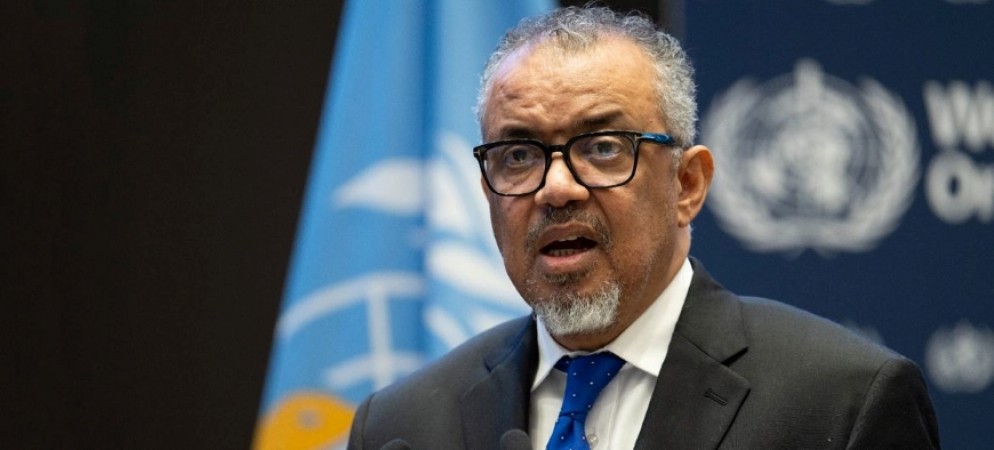
 WHO Director-General Tedros Adhanom Ghebreyesus
A landmark study published in Nature Medicine has raised alarm over a growing disconnect between global health research and the world’s actual disease burden, warning that looming U.S. funding cuts could further widen the gap.
The analysis, led by researchers at the University of Mannheim, mapped more than 8.6 million disease-specific publications against two decades of data on disease prevalence and mortality. While research output has surged worldwide, the study found it remains poorly aligned with the conditions causing the greatest harm—and the divergence is projected to worsen sharply over the next 20 years.
“Without sustained U.S. public funding, the mismatch between research and disease burden is likely to widen by a third,” the authors caution. Historically, the United States—through the National Institutes of Health (NIH) and other agencies—has been the largest single funder of biomedical research, particularly in underfunded but high-impact areas such as HIV/AIDS, malaria, and tuberculosis.
The study warns that reductions in U.S. investment would deal a double blow: undermining progress on communicable diseases that disproportionately affect low-income countries while also slowing advances in non-communicable illnesses like cancer and neurological disorders, which are straining health systems worldwide.
Marc Lerchenmüller, co-author and assistant professor at Mannheim, said the findings show “a significant weakening of research for infectious diseases, which will hit the global south hardest, alongside chronic illnesses that remain a major challenge for Western health systems.”
While countries such as China, the UK, and Canada could partially step in where they have established strengths, the researchers argue that no nation alone can replace U.S. funding at scale. Instead, they call for stronger international coordination—potentially through treaty-based mechanisms—to stabilise long-term biomedical research investment.
The findings come amid political uncertainty in U.S. science policy. Past funding cuts and shifts during the Trump administration sparked global concern, and observers warn that another retrenchment could undermine decades of global health gains.
“The fragility of relying on one dominant funder should be offset by stability through greater global coordination,” the authors conclude, urging governments to align research investments more closely with the world’s pressing health needs.
Article by RB Reporter
Photo/Google
Comment