
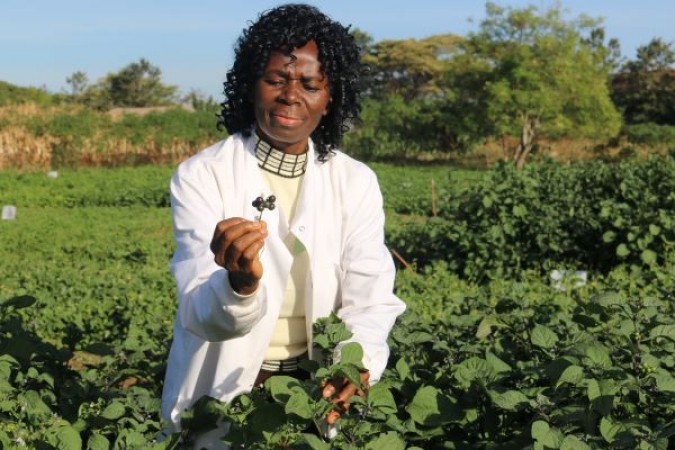
 Professor Mary Abukutsa
Kenyan horticulturist Professor Mary Abukutsa has been awarded the 2025 Africa Food Prize in recognition of her pioneering research and advocacy for indigenous African vegetables, crops once dismissed as “poor man’s food” but now increasingly celebrated as climate-resilient superfoods.
The announcement was made at the Africa Food Systems Forum in Dakar, Senegal, where Abukutsa received the US$100,000 award, the continent’s most prestigious honour for individuals and institutions transforming African agriculture.
For more than 30 years, Abukutsa has dedicated her career to studying, cultivating, and promoting African leafy greens such as African nightshade and jute mallow. These vegetables, rich in micronutrients and resilient to drought, are now being positioned at the heart of Africa’s strategies to combat malnutrition, improve food security, and adapt to climate change.
“Winning this prize affirms that indigenous vegetables are central to Africa’s food system transformation,” Abukutsa said. “What was once neglected is now recognised as a global public good capable of addressing hunger, health, and livelihoods.”
At Jomo Kenyatta University of Agriculture and Technology (JKUAT), where she leads a research consortium, Abukutsa has overseen projects that combine climate-smart farming practices with market development to expand the commercialisation of indigenous crops. Farmers in counties such as Kakamega and Kiambu are seeing higher incomes, while consumers benefit from improved access to affordable, nutritious foods.
Her impact extends beyond research plots and university halls. Over the years, she has helped register new vegetable varieties, trained more than 50,000 farmers, and influenced national policies to integrate indigenous vegetables into Kenya’s food and nutrition agenda.
The recognition comes at a time when Africa’s food systems face mounting challenges from climate change, population growth, and rising rates of diet-related diseases. Experts say Abukutsa’s work demonstrates how indigenous knowledge and science can combine to deliver sustainable solutions.
“The transformation of indigenous vegetables from neglected crops into mainstream commodities is a story of persistence and vision,” said one panellist at the Dakar forum. “It shows the power of African-led innovation in reshaping food systems.”
Looking ahead, Abukutsa plans to expand her work across the continent, developing an “atlas” of indigenous vegetables and scaling up climate-smart cultivation techniques. She also hopes to inspire a new generation of young African scientists to champion underutilised crops.
“My dream is that every household in Africa will value and access these vegetables,” she said. “This award is not just a recognition of the past, but an invitation to secure the future of African food systems.”
Article by Jed Mwangi
Photo/JKUAT
https://aasciences.africa/news/decades-of-work-earn-top-scholar-the-2025-africa-food-prize
Comment