
African scientists have secured significant representation in the 2027 class of Fellows of The World Academy of Sciences (TWAS), with researchers from across the continent recognised for contributions spanning agriculture, health, biotechnology, environmental science, engineering and other disciplines.
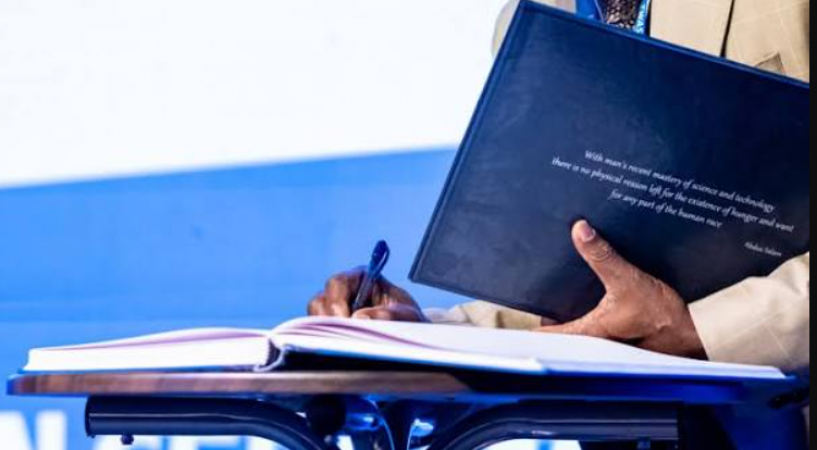
The Academy announced on 5 November 2026 that it had elected 87 new regular Fellows, including 19 scientists from 11 African countries. The new members will officially be inducted on 1 January 2027.
The African contingent includes scientists from Algeria, Egypt, Ethiopia, Ghana, Kenya, Morocco, Nigeria, Rwanda, Senegal, South Africa and Zimbabwe, reflecting the breadth of scientific expertise emerging from African research institutions and universities.
South Africa leads the African representation with six new Fellows, followed by Nigeria with four. Algeria, Egypt, Ethiopia, Ghana, Kenya, Morocco, Rwanda, Senegal and Zimbabwe are each represented by one scientist.
Among the African researchers recognised is Kenyan scientist Menale Kassie, Head of Monitoring, Evaluation and Impact Assessment at the International Livestock Research Institute (ILRI) in Nairobi.
Kassie's research focuses on agricultural technology adoption, impact assessment, gender research and the transformation of agrifood systems in sub-Saharan Africa. According to TWAS, Kassie has published 110 peer-reviewed research papers, accumulated more than 21,600 Google Scholar citations and seen his work cited in over 1,660 policy documents worldwide.
Nigeria also features prominently with four scientists recognised for their contributions to food science, microbiology, environmental chemistry and social sciences.
Among them is Ganiyu Oboh, Professor of Food Biochemistry at the Federal University of Technology, Akure. His research focuses on functional foods and nutraceuticals, particularly the development of nutritious products from indigenous crops and agricultural waste.
Another Nigerian inductee, Etinosa Ogbomoede Igbinosa of the University of Benin, is recognised for research addressing antimicrobial resistance, water quality and environmental health.
Other Nigerian scientists elected include Bamidele Iromidayo Olu-Owolabi, whose research explores affordable materials for water purification, and Ayodele Samuel Jegede, whose work examines community-based health interventions, healthcare practices and research ethics.
In South Africa, the six new Fellows represent a range of scientific disciplines, including agriculture, conservation biology, medical research, chemistry, physics and economics.
Among them is Eugenie Kayitesi of the University of Pretoria, whose research addresses food insecurity and malnutrition through the promotion of indigenous and underutilised plant-based foods. Her work demonstrates the potential of local crops to improve nutritional quality and provide alternatives to expensive imported food staples.
Zimbabwean agricultural scientist Lindiwe Majele Sibanda, also based at the University of Pretoria, has been recognised for her contribution to sustainable food systems and agricultural policy. Her work has helped connect farmers, research institutions and policymakers, strengthening evidence-based approaches to food security, climate resilience and agricultural transformation across Africa.
Other South African inductees include conservation biologist Claire Spottiswoode and medical researcher Alison September, both of the University of Cape Town; physical chemist Eno Effiong Ebenso of the University of South Africa; physicist Andrew Forbes of the University of the Witwatersrand; and economist Nicholas Mbaya Odhiambo of the University of South Africa.
Elsewhere on the continent, Ethiopia's Teketel Yohannes Anshebo, Executive Director of the Ethiopian Academy of Sciences, has been recognised for his contributions to chemical sciences, particularly polymer research and flexible solar-cell technology.
Rwanda's Leon Mutesa, Professor of Human Genetics and Director of the Centre for Human Genetics and Genomics at the University of Rwanda, joins the new cohort for his contributions to genetics and genomics. He spearheaded the establishment of Rwanda's reference centre for human genetics, the only facility of its kind in East Africa.
Ghana is represented by Margaret Gyapong, a medical anthropologist at the University of Health and Allied Sciences. Her research has informed policy decisions on malaria, maternal and child health, and neglected tropical diseases.
Senegal's Papa Salif Sow, Professor of Infectious and Tropical Diseases at the University of Dakar, has been recognised for his work in expanding access to HIV treatment across Africa.
Morocco's Meryem Lemrani, Research Director at the Institut Pasteur of Morocco, joins the Academy for her contributions to molecular and digital diagnostics, particularly in detecting and studying Leishmania parasites responsible for leishmaniasis.
The 2027 cohort also marks an important milestone in the Academy's efforts to broaden geographical representation. TWAS identified Ethiopia, Ghana, Rwanda and Zimbabwe, among other countries, as having been underrepresented in its membership.
Globally, of the 87 newly elected regular Fellows, 29 are women, representing 33.3 per cent of the cohort. Overall, 77 of the new Fellows come from countries in the Global South.
The Academy has also introduced an honorary membership category for the first time, electing four individuals in recognition of exceptional contributions to science, technology and education in the Global South.
The new Fellows will officially be inducted on 1 January 2027, bringing TWAS's total membership to 1,510.
Article by Jed Mwangi
Photo courtesy:Google
https://twas.org/article/twas-elects-2027-class-fellows
Comment