
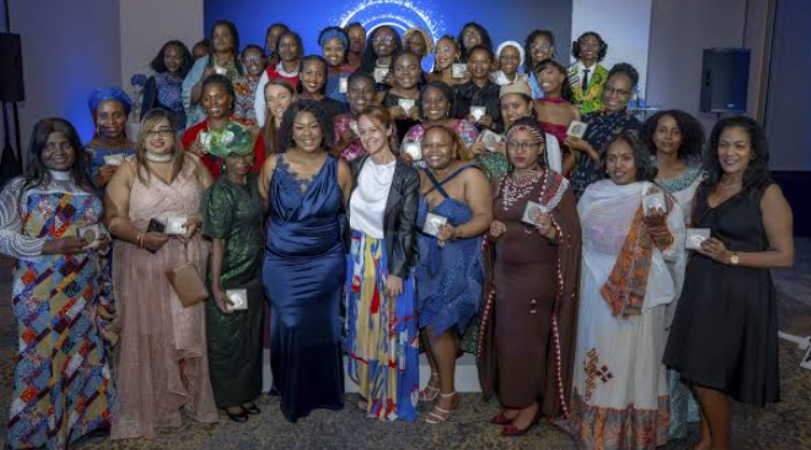
Thirty-eight women scientists from across Sub-Saharan Africa have been recognised for research aimed at addressing critical challenges in healthcare, food systems, clean energy, water access and technology at the 2026 L’Oréal-UNESCO For Women in Science Awards.
The researchers, comprising 30 doctoral and eight postdoctoral candidates, were selected from more than 1,000 applications and honoured at a ceremony in Johannesburg, South Africa, on November 19.
The awardees represent 14 countries: Nigeria, Ethiopia, Ghana, Tanzania, South Africa, Malawi, Cameroon, Guinea, Botswana, Mozambique, Benin, Madagascar, Namibia and the Democratic Republic of Congo.
Among the named recipients are eight Nigerian researchers: Adetomilola Victoria Fafure, Ayopo Sotade, Chisom Soremekun, Cynthia Odili, Funmilola Oluwafemi, Opemipo Ajibola, Peace Abaya and Mercy Bella-Omunagbe. Ethiopia is represented by Admas Tsegaye, Tseganesh Getachew Gebrehana and Tsion Amsalu Fode, while Ghana’s awardees are Ama Frempomaa Oduro and Sheba Mary Pognaa Kunfah.
Other named recipients include Angel Gabriel Meela, Dativa Pereus, Grantina Modern and Hope Mbelwa from Tanzania; Caitlin Wheeler, Hlengiwe Nombuso Mtetwa, Lebogang Motsomone, Nikita Singh, Nonjabulo Mbhele, Roxanne Malan and Shandry Tebele from South Africa; and Christine Mandalasi from Malawi.
Cameroon’s recipients are Darline Dize, Linda Bih Numfor, Prudence Tatiana Nti Mvilongo and Teke Efeti Mary. The other awardees named in published reports are Haby Diallo from Guinea, Karabo Kefilwe Ndebele from Botswana, Kiba Comiche from Mozambique, Kpêtchéhoué Merveille Santi Zinsou and Mireille Gloria Founmilayo Odounfa from Benin, Ramiandrisoa Marie Larissa from Madagascar, Rosetha Kays from Namibia and Salama Matumaini Béatrice from the Democratic Republic of Congo.
Their research reflects the growing role of African women in developing scientific solutions to challenges affecting the continent, with projects ranging from affordable water purification technologies to advanced disease diagnosis and renewable energy storage.
Among the innovations recognised are low-cost water filters developed using clay and cassava peel, batteries and supercapacitors made from agricultural waste, and artificial intelligence tools designed to improve disease diagnosis in humans and crops.
Other researchers are investigating medicinal plants for potential applications against drug-resistant bacteria, exploring wastewater surveillance as a tool for tuberculosis detection and studying genetic variations associated with type 2 diabetes.
The awards provide financial support to researchers at different stages of their careers, with doctoral candidates receiving €10,000 grants and postdoctoral researchers receiving €15,000. Recipients also benefit from training in leadership, science communication and career development.
According to UNESCO's 2025 publication, Status and Trends of Women in Science: New Insights and Sectoral Perspectives, women account for approximately one-third of researchers globally and 35 per cent of Science, Technology, Engineering and Mathematics graduates.
In Sub-Saharan Africa, women represent 33.6 per cent of researchers, based on 2022 data, although their participation varies significantly across countries. The figures range from 9.8 per cent in Guinea, based on 2013 data, to 47.6 per cent in South Africa in 2022.
Since its establishment in 1998, the For Women in Science programme, run by Fondation L’Oréal in partnership with UNESCO, has supported more than 5,000 researchers across over 140 countries.
Photo courtesy: Google
https://www.knownmagazine.africa/38-african-women-scientists-honoured-at-2026-loreal-unesco-awards/
Comment