
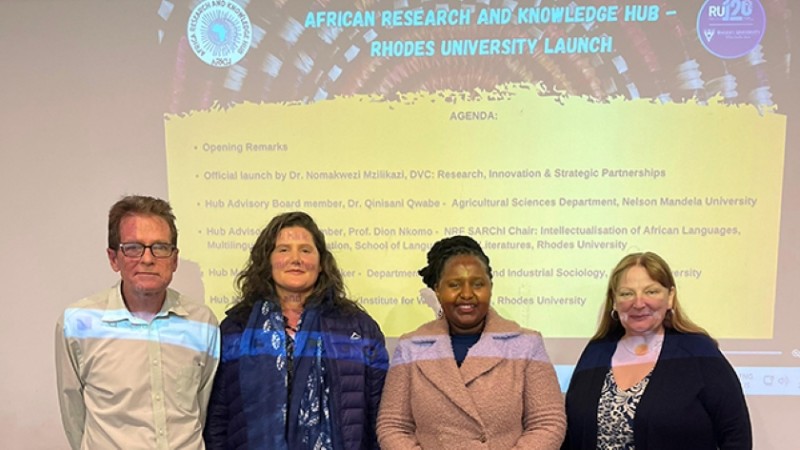
In a transformative stride toward African-led scholarship and interdisciplinary research, Rhodes University has officially launched the Africa Research and Knowledge Hub (ARKH), a dynamic initiative aimed at redefining knowledge production across the continent.
Now recognised as an institutional research group within the Department of Sociology, ARKH began as a grassroots digital platform founded in early 2024 by Dr. Joshua Matanzima, a Rhodes alumnus and current research officer at the University of Queensland. What started with a three-person team has since grown into a transdisciplinary pan-African community engaging with urgent socio-environmental challenges facing the continent.
“ARKH embodies the shift from siloed research to cross-sectoral collaboration,” said Dr. Matanzima at the launch event. “We aim to empower emerging scholars and amplify community voices, co-producing knowledge that reflects Africa’s lived realities.”
Officiated by Dr. Nomakwezi Mzilikazi, Rhodes University’s Deputy Vice-Chancellor for Research, Innovation & Strategic Partnerships, the launch underscored the institution’s commitment to research excellence, postgraduate development, and socially transformative inquiry.
“The Hub’s research priorities – spanning agroecology, water governance, indigenous sovereignty, and energy transitions – align directly with Africa’s sustainability goals,” Dr. Mzilikazi noted. “This is central to our vision of becoming a leading research-intensive university.”
Prominent voices in academia marked the launch, including Professor Dion Nkomo, SARChI Chair in Multilingualism and Education, who called for “purposeful, socially engaged research” and urged scholars to resist rigid academic norms when they hinder relevance and innovation.
A hallmark of ARKH’s impact is its already-successful webinar series, which since 2024 has served as a platform for African and diaspora scholars to share applied research and connect across borders. Jamie Alexander from the Institute for Water Research emphasised the Hub’s value in fostering inclusion and linking researchers with underrepresented perspectives.
Unique in its origin and structure, ARKH evolved from an informal digital network into a fully endorsed university research group. This progression exemplifies how nontraditional knowledge spaces can shape institutional direction and open new pathways for grants, collaborations, and postgraduate mentorship.
Professor Kirk Helliker, Head of the Unit of Zimbabwe Studies and a founding member of the Hub, described it as “an open-ended intellectual project designed to evolve organically.” He extended an invitation to scholars across Africa and the diaspora to join the initiative and contribute to its continued growth.
With ARKH, Rhodes University is not only investing in the future of research but also reshaping how African universities can lead global scholarship from the ground up.
Article by RB Reporter
Photo/Google
Comment