
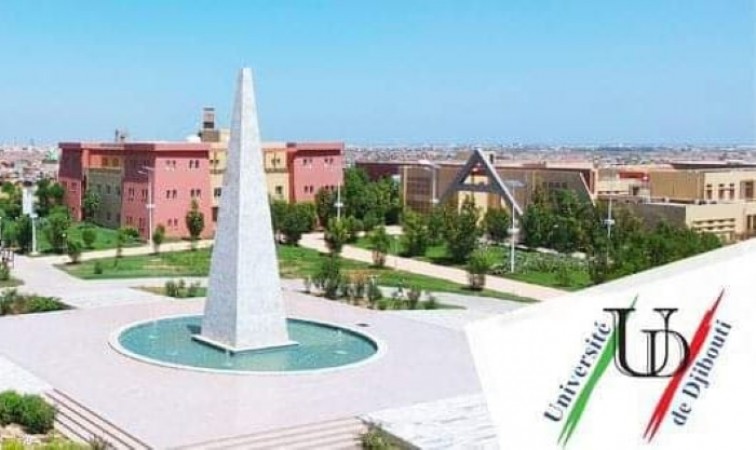
The University of Djibouti has officially inaugurated a cutting-edge research facility designed to accelerate the country’s transition to renewable energy and support modernisation of its power systems, marking a significant step toward energy sovereignty and sustainable development in the Horn of Africa.
The Laboratory of Research in Energy and Energy Systems (LaRESE) was launched on 15 January 2026 under the African Centres of Excellence Impact (ACE-Impact) project, a continent-wide initiative backed by the World Bank to strengthen applied research, innovation and higher education across sub-Saharan Africa.
Equipped with modern scientific instruments and facilities, LaRESE will focus on advancing renewable energy development, electricity grid optimization and sustainable resource management, providing researchers, faculty and students with the tools to generate practical solutions for national and regional energy challenges.
“This infrastructure will enable our researchers and students to develop concrete and useful solutions for Djibouti and the region,” said Souleiman Omar Hoch, coordinator of the ACE-Impact project, emphasizing the facility’s role in fostering innovation and research excellence.
Djibouti has long relied on electricity imports, largely from neighbouring Ethiopia to meet its growing power needs. However, the country possesses abundant solar, wind and geothermal potential, which its government and development partners see as crucial for securing energy independence and resilience. Recent World Bank analysis highlights that tapping these resources can help Djibouti diversify its energy mix, reduce costs, and accelerate sustainable growth.
By strengthening local research capacity, the LaRESE centre is expected to contribute directly to national energy strategies and infrastructure planning. It will also serve as an incubator for technologies tailored to Djibouti’s unique environmental conditions and energy needs.
Led by Chaker Ibrahim Omar, LaRESE is designed not only as an academic lab but as a regional hub for scientific cooperation, welcoming researchers and students from across East Africa to collaborate on projects, training and knowledge exchange. Officials say this approach will enhance cross-border research and help build a critical mass of expertise in renewable technologies.
The inauguration ceremony was attended by senior government officials, including Minister of Higher Education and Research Nabil Mohamed Ahmed and University President Djama Mohamed Hassan, who described the centre as a milestone for both education and technological innovation in Djibouti.
Officials noted that LaRESE will enhance domestic educational opportunities, help retain skilled scientists who might otherwise seek training abroad, and position Djibouti as a centre of technological innovation in the Horn of Africa.
The establishment of LaRESE aligns with the broader goals of the ACE-Impact project, which has been instrumental in upgrading research infrastructure, enhancing postgraduate training and fostering applied research across African universities. Through World Bank support, ACE-Impact centres are being developed in diverse fields including energy, health, engineering, and food systems, with the aim of reversing brain drain and boosting innovation capacity on the continent.
Photo courtesy / Google
Article by RB correspondent
Comment