
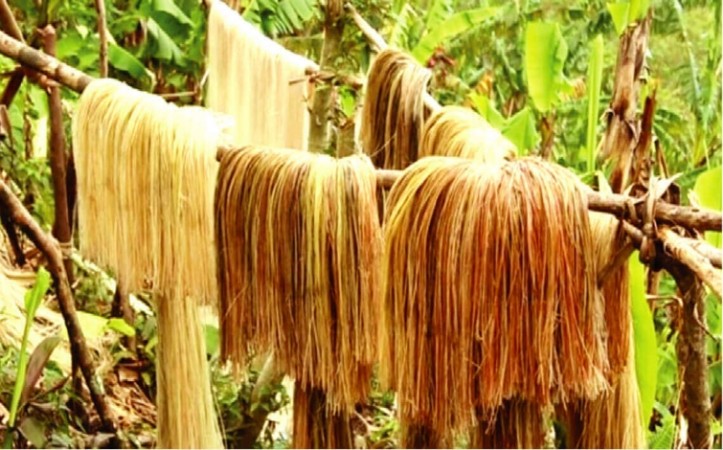
A groundbreaking project at Busitema University in Uganda is turning heads in the global fashion and sustainability sectors by transforming banana farming waste into high-quality textile products. The initiative—Banatex-EA (Banana Textiles in East Africa)—is converting banana pseudostems, typically discarded after harvest, into commercially viable fibres that may one day rival conventional materials like cotton and synthetics.
Launched in March 2024, Banatex-EA is part of a broader effort to promote climate-resilient and circular economies across East Africa. The project is funded by a £600,600 grant from the Uganda National Council for Science and Technology, under the Science Granting Councils Initiative (SGCI), with support from the UK’s Foreign, Commonwealth and Development Office.
“Banana production generates enormous organic waste, but we’re proving that this waste can be repurposed into high-quality textile material,” said Edwin Kamalha, lead researcher and head of the Department of Polymer, Textile and Industrial Engineering at Busitema University.
Uganda’s banana sector supports nearly 75% of its farmers, but much of the plant’s biomass is wasted. Through Banatex-EA, that waste is now being transformed into fibre-based cloth, hair extensions, and even sanitary pads. In partnership with local textile company TEXFAD, the team is working to commercialise the products while training youth and engaging local communities.
According to TEXFAD Executive Director Kimani Muturi, banana fibre has the potential to become “the new cotton” if supported by proper technology and infrastructure.
The project’s fibre source—the Kayinja banana variety, traditionally used for banana wine—was identified by researchers at the National Agricultural Research Laboratories as the most fibre-efficient cultivar. Its fibres are known for their durability and lustrous sheen, making them ideal for both utility and fashion applications.
Yet, the innovation faces legal and logistical hurdles. Uganda’s absence of a biotechnology law restricts research into genetically modified, fibre-specific banana strains. “We’re currently limited to working with existing cultivars,” explained project coordinator Abdullah Kaggwa.
International trade presents another barrier. Without Harmonised System (HS) codes—a global classification system for traded goods—exporting banana fibre remains complicated and expensive.
Despite these challenges, the growing demand for eco-friendly materials is opening doors. With the global eco-fibre market projected to exceed $100 billion by 2030, Uganda may soon emerge as a regional leader in sustainable textile innovation.
Looking ahead, Banatex-EA researchers envision even broader applications for banana fibre—including home décor, industrial packaging, and automotive materials—positioning Uganda at the forefront of green manufacturing in Africa.
Article by Nyokabi Wanjiku
Photo/Google
https://www.scidev.net/global/supported-content/banana-fibres-refined-for-textiles-hair-extensions/
Comment