
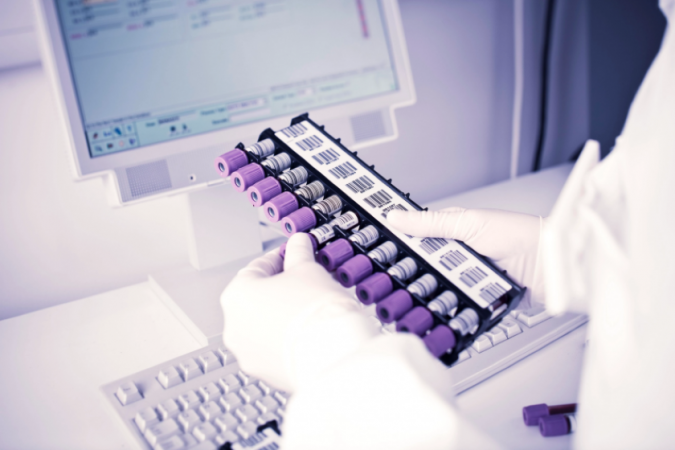
In a groundbreaking leap for African medical research, Makerere University Hospital has unveiled the "Olink Proteomics Platform", East and Central Africa’s first high-precision proteomics facility. This state-of-the-art lab positions Uganda as a regional leader in advanced disease diagnostics, biomarker discovery, and personalised medicine, ending decades of reliance on foreign laboratories for critical research.
The platform leverages "Proximity Extension Assay (PEA) technology", a globally acclaimed method for analysing protein biomarkers with unmatched accuracy, even from tiny biological samples. This breakthrough enables African scientists to conduct high-throughput proteomic studies locally, accelerating research timelines and ensuring data sovereignty.
“This is the first automated Olink workflow on African soil,” declared Dr. Sam Ali, Principal Investigator of the iTECH Project, spearheaded the initiative. "No more shipping samples abroad. Our researchers can now perform world-class proteomics right here in Uganda.”
The facility was established through a partnership between Olink Proteomics, Wellcome Leap, and Makerere’s "iTECH Project". At the launch event, Uganda’s Minister of Science, Technology, and Innovation, Dr. Monica Musenero, hailed the platform as a catalyst for national development, urging scientists to translate research into lifesaving solutions.
"Let this not be just a research centre,” Dr. Musenero emphasised. “Let it become a tech hub solving real health crises. We cannot wait until diseases become untreatable—science must act now.”She linked the launch to Uganda’s "National Development Plan 2025–2030", which prioritises science and innovation as economic pillars, and pledged government support to integrate the lab’s findings into national health policies.
The Olink Platform will revolutionise research on cancer, HIV/TB, malaria, diabetes, pre-eclampsia, and emerging infections —conditions that disproportionately affect Africa yet have long been studied abroad due to limited local capacity.
Prof. Barnabas Nawangwe, Makerere University’s Vice Chancellor, stressed the facility’s role in homegrown innovation: "We’re not just publishing papers; we’re generating solutions, training Africa’s next scientists, and asserting Uganda’s leadership in biomedical research.”
For years, African researchers faced delays and logistical hurdles in sending samples overseas for analysis. The Olink Platform dismantles these barriers, offering faster, cheaper, and locally controlled research —a game-changer for precision medicine and vaccine development.
With this launch, Makerere signals a seismic shift: Africa is no longer a bystander in cutting-edge health research but a pioneer shaping its future. The facility is expected to attract global collaborations while nurturing a new generation of African scientists equipped to tackle the continent’s most pressing health challenges.
Article by RB Reporter
Photo/Google
Comment