
African universities and public health institutions are taking on a greater leadership role in global epidemic preparedness through a new £18 million international research partnership aimed at strengthening outbreak response systems across Africa, Asia, and Latin America.
The five-year initiative forms part of the next phase of the UK Public Health Rapid Support Team (UK-PHRST), bringing together leading academic and health institutions to generate evidence that can improve how countries prepare for and respond to infectious disease threats.
The consortium includes the Liverpool School of Tropical Medicine (LSTM), the London School of Hygiene & Tropical Medicine (LSHTM), the University of Oxford's Pandemic Sciences Institute, and a strong network of African partners, including Makerere University in Uganda, the École Inter-États des Sciences et Médecine Vétérinaires in Senegal, the Université Catholique de Bukavu in the Democratic Republic of Congo, SIMAD University in Somalia, and the Africa Centres for Disease Control and Prevention (Africa CDC), which will serve as a coordinating partner.
The renewed partnership reflects a broader shift in global health research toward shared leadership models that place institutions in low- and middle-income countries at the centre of defining priorities, leading studies, and translating findings into policy and practice.
Researchers will focus on critical evidence gaps that have emerged from recent outbreaks, including mental health support during emergencies, gender and equity considerations, community engagement, artificial intelligence applications, diagnostics, and One Health approaches that recognize the interconnected health of people, animals, and ecosystems.
Dr Thomas Edwards, who leads LSTM's contribution to the programme, said global collaboration remains essential in tackling infectious disease threats that transcend national borders.
"Infectious disease outbreaks do not respect borders, making global collaboration essential to protecting health worldwide," he said.
"This partnership brings together leading institutions from across multiple regions, with a strong commitment to ensuring research priorities and leadership are driven by those closest to the communities most affected."
One of the key workstreams will be led by LSTM on mental health and psychosocial support (MHPSS), an area increasingly recognised as a vital component of effective outbreak response but one where evidence remains limited.
The UK Public Health Rapid Support Team was established following the 2014–2015 West African Ebola epidemic to support countries facing infectious disease outbreaks and public health emergencies. Funded by the United Kingdom's Department of Health and Social Care in partnership with the National Institute for Health and Care Research (NIHR), the initiative combines operational research with rapid deployment capabilities to improve outbreak detection, preparedness, and response.
Over the past decade, UK-PHRST-supported research has informed policies and guidance adopted by both the World Health Organization and Africa CDC, while contributing to responses during Ebola outbreaks in West and East Africa, mpox emergencies, and other health crises.
The latest investment builds on those experiences by strengthening institutional capacity across Africa and embedding research expertise within regional networks that can respond more rapidly to future emergencies.
The involvement of universities in Uganda, Senegal, Somalia, and the Democratic Republic of Congo highlights the growing role African institutions are playing in shaping global health security agendas. Rather than serving solely as implementation sites, these institutions are increasingly contributing scientific leadership, local knowledge, and policy-relevant evidence generation.
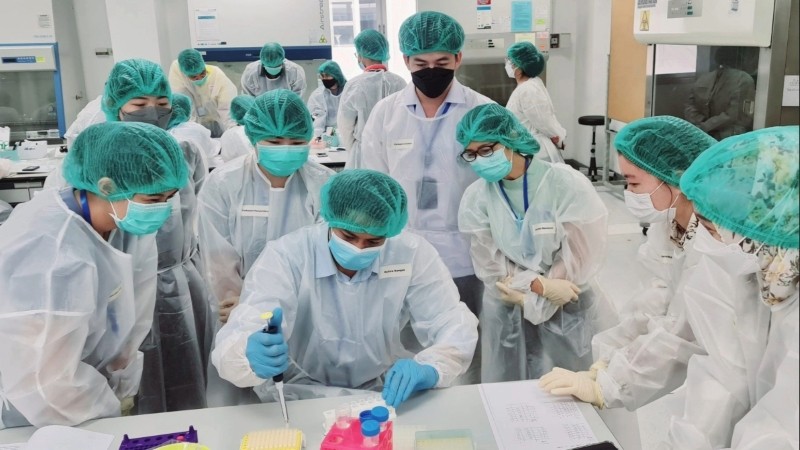
Photo courtesy :Global Health Security
Article by Jed Mwangi
Comment