
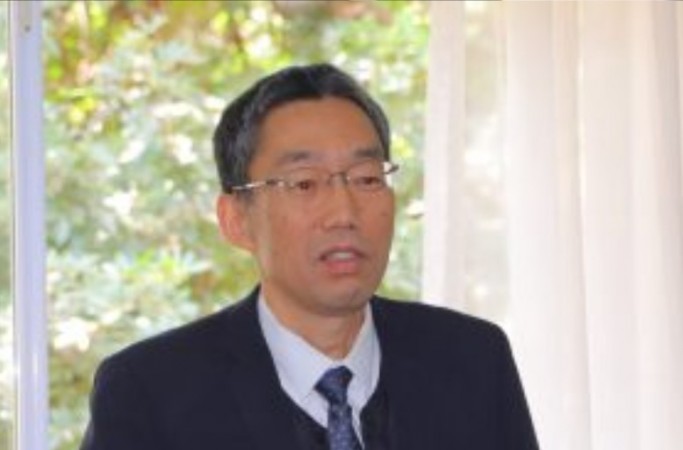
 JICA Chief Representative, Mr. Makoto Shinkawa, delivers his remarks during the JCC meeting at JKUAT
Japan is expanding its long-standing investment in African higher education by strengthening Jomo Kenyatta University of Agriculture and Technology (JKUAT) as a continental hub for science, technology and innovation, reinforcing efforts to build research capacity, industry partnerships and academic collaboration across Africa.
The move comes under the third phase of the AFRICA-ai-JAPAN Project, which was endorsed during the first Joint Coordination Committee (JCC) meeting held at JKUAT in Nairobi. The new phase marks a strategic shift from institutional support toward building a stronger Africa-wide innovation ecosystem anchored in Kenyan and Pan-African institutions.
Officials from Kenya’s Ministry of Education, the Japan International Cooperation Agency (JICA), the Embassy of Japan, the Pan African University Institute for Basic Sciences, Technology and Innovation (PAUSTI), and JKUAT agreed on a new implementation framework that positions JKUAT and PAUSTI as regional centres of excellence for scientific research, innovation and advanced training.
Under the renewed programme, the partnership will focus on strengthening research capacity, expanding academic exchanges between African and Japanese universities, supporting joint research projects, developing curricula, promoting technology transfer, and deepening collaboration with industry to ensure research generates practical solutions for development challenges.
A key pillar of the initiative is the Africa-Japan Innovation Network for Science, Technology and Innovation (AJ-INSPIRE), which seeks to connect universities, research institutions and private-sector partners across Africa and Japan to accelerate scientific innovation and human capital development.
JICA Chief Representative Makoto Shinkawa said continued investment in African universities is essential for developing the scientific talent and innovation capacity needed to address the continent's development priorities.
"As JICA, we believe it is imperative to continue building and strengthening the capacity of our partner institutions to drive innovation, advance research, and develop the skilled human resources needed to address Africa's development challenges," he said.
Kenya's State Department for Higher Education also welcomed the next phase, noting that the programme has played an important role in strengthening research collaboration, improving science and engineering education, and developing highly skilled researchers across the region.
According to JKUAT Vice Chancellor Prof. Victoria Wambui Ngumi, previous phases of the partnership have significantly expanded the university's research capabilities, supporting breakthroughs in agriculture, biotechnology, engineering, artificial intelligence and robotics while strengthening collaboration with Japanese universities.
She said targeted research grants and international partnerships have enabled the university to generate practical innovations addressing challenges such as agricultural productivity, emerging technologies and industrial development.
The renewed programme also introduces a stronger monitoring framework, cross-cutting teams to coordinate industry engagement, and expanded opportunities for staff and student exchanges, reflecting an increasing emphasis on translating research into innovation and economic impact.
The partnership builds on more than a decade of collaboration between JICA and JKUAT. Since the AFRICA-ai-JAPAN Project was launched in 2014, it has helped strengthen postgraduate training through PAUSTI, enhanced research infrastructure, expanded international scientific networks, and increased Africa-Japan academic cooperation.
Photo Courtesy of JKUAT
Article by Jed Mwangi
https://www.jkuat.ac.ke/japans-new-support-for-africas-higher-education-takes-root-at-jkuat/
Comment