
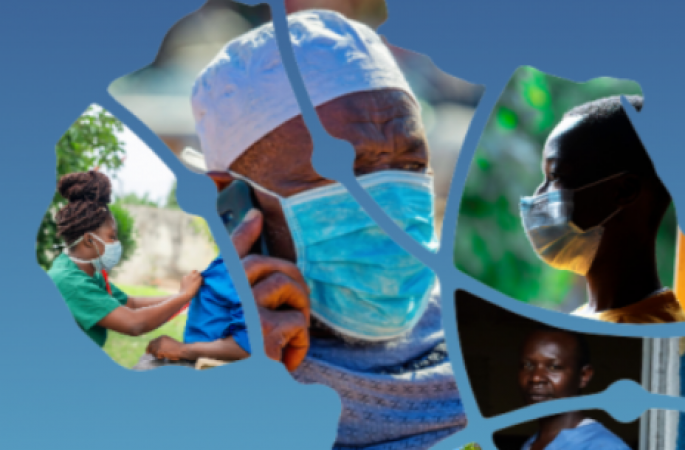
Africa has made significant strides in strengthening its ability to prevent, detect and respond to infectious disease threats over the past five years, but critical weaknesses continue to leave the continent vulnerable to future epidemics and pandemics, according to the newly released 2026 Africa Health Security (AHS) Index.
The inaugural index paints a mixed picture of Africa's health security landscape. While nearly every country has improved its preparedness since 2021, the continent's average score of 41.5 out of 100 highlights substantial gaps in health systems, biosecurity, laboratory safety and emergency preparedness that could allow localized outbreaks to escalate into regional or global crises.
Developed by a coalition of African and international public health experts, research institutions and security organizations, the index assessed all 54 African countries across 190 indicators covering prevention, detection, rapid response, health systems, governance and broader risk environments. Unlike previous global assessments, the framework was specifically designed around African priorities to provide governments with an evidence-based tool for strengthening national and regional health security.
The findings indicate that investments made following the COVID-19 pandemic are beginning to yield results. Africa's overall preparedness has improved by almost 30 percent compared with five years ago, with 52 of 54 countries recording higher scores. Progress was recorded across nearly every major category, including surveillance systems, emergency operations, laboratory capacity and outbreak response coordination.
However, the report warns that progress remains uneven and fragile.
One of the most concerning findings relates to biosecurity and biosafety, where average scores remain among the lowest across the index. While laboratory infrastructure has expanded significantly, governance systems to safely manage dangerous pathogens have not kept pace. The assessment found that only a handful of African countries systematically track facilities handling high-risk biological agents, exposing persistent vulnerabilities in outbreak prevention.
The index is being released against the backdrop of the ongoing Bundibugyo Ebola outbreak in Central Africa, which has reinforced the importance of strong cross-border surveillance and coordinated regional responses. Public health experts note that increasing urbanization, climate change, conflict, population mobility and the growing threat of antimicrobial resistance are creating more complex disease risks across the continent.
The report argues that strengthening health security can no longer rely solely on emergency response. Instead, countries must build resilient health systems capable of preventing outbreaks before they occur while improving routine surveillance, workforce development, laboratory governance and sustainable domestic financing.
The assessment also highlights encouraging signs of stronger continental cooperation. Emergency operations centres are now operational in most African countries, and regional institutions such as the Africa Centres for Disease Control and Prevention continue to play an increasingly important role in coordinating preparedness, surveillance and emergency response across borders.
Researchers behind the index say the findings should serve not simply as a scorecard but as a roadmap for governments, development partners and public health institutions to prioritize investments that strengthen long-term resilience. As biological threats continue to evolve, they argue, sustained investment in preparedness will determine whether future outbreaks remain localized events or become continent-wide emergencies.
Photo courtesy: The World Health Organization(WHO)
Article by Jed Mwangi
Comment