
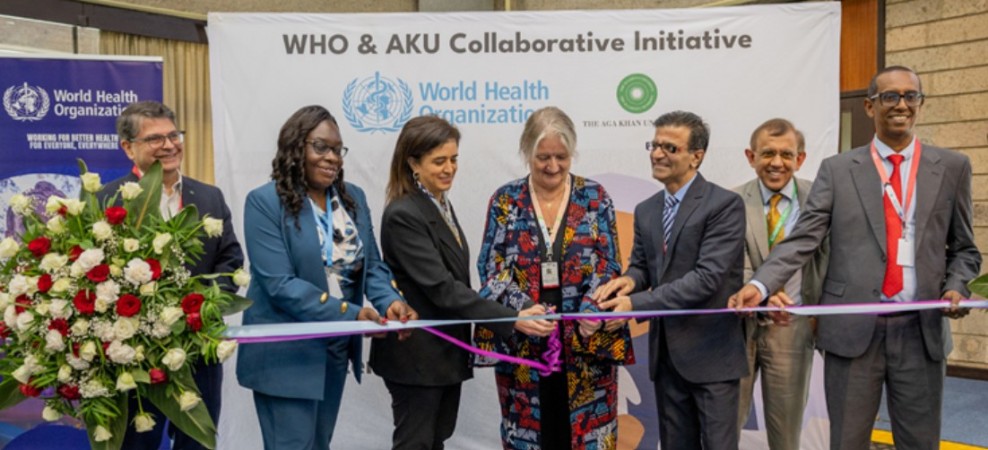
A new partnership between the World Health Organization and Aga Khan University is set to strengthen Africa’s response to women’s cancers, marking the first WHO collaborative initiative on the continent dedicated specifically to breast and cervical cancer.
The agreement, signed with AKU’s Centre of Excellence in Women and Child Health, East Africa, signals a shift toward more integrated and context-driven approaches to cancer prevention and care. The initiative will focus on three core areas: generating and synthesizing evidence, building health workforce capacity, and advancing implementation research to bridge the gap between global standards and real-world health system constraints.
This comes at a critical moment as cancer places increasing pressure on health systems across low- and middle-income countries, which account for more than 70% of global cancer-related deaths. In Kenya, the urgency is particularly acute, with cancer now the second leading cause of death and breast and cervical cancers accounting for nearly half of all new cases annually.
By focusing on practical, scalable solutions, the collaboration aims to address long-standing barriers in screening, diagnosis, referral systems, and treatment access. Planned interventions include expanding human papillomavirus (HPV) screening, improving diagnostic turnaround times, strengthening referral networks, and optimizing the use of existing treatment infrastructure such as radiotherapy.
According to Marleen Temmerman, the initiative reflects a broader commitment to advancing equitable access to quality cancer care through research, innovation, and capacity building. The partnership also aligns with WHO’s global priorities under its current programme of work, which emphasizes universal health coverage and improved access to essential services.
Government officials have underscored the role of implementation research in ensuring that interventions are not only effective but also adaptable to local contexts. Omar Albush noted that the initiative will help identify models that reduce late-stage diagnosis and improve timely access to care, two of the most persistent challenges in cancer management across the region.
The collaboration builds on previous WHO partnerships with AKU in other regions, where joint efforts have contributed to improvements in patient safety and reproductive health services. Hanan Balkhy indicated that the Africa initiative will similarly focus on integrated service delivery models, including “one-stop” care systems that streamline patient pathways from screening to treatment.
Beyond service delivery, the initiative places strong emphasis on workforce development, including training and specialist mentorship to strengthen clinical and research capacity. This is seen as essential to building resilient health systems capable of responding to the growing burden of non-communicable diseases.
Tania Bubela highlighted that rising rates of chronic diseases are placing additional strain on already stretched health systems, reinforcing the need for coordinated, long-term investment in prevention and care.
By combining global expertise with locally grounded research and implementation, the partnership aims to deliver more accessible, timely, and effective cancer care for women across the continent.
Photo Courtesy / WHO
Article by Jed Mwangi
https://www.aku.edu/news/Pages/News_Details.aspx?nid=NEWS-003832
Comment