
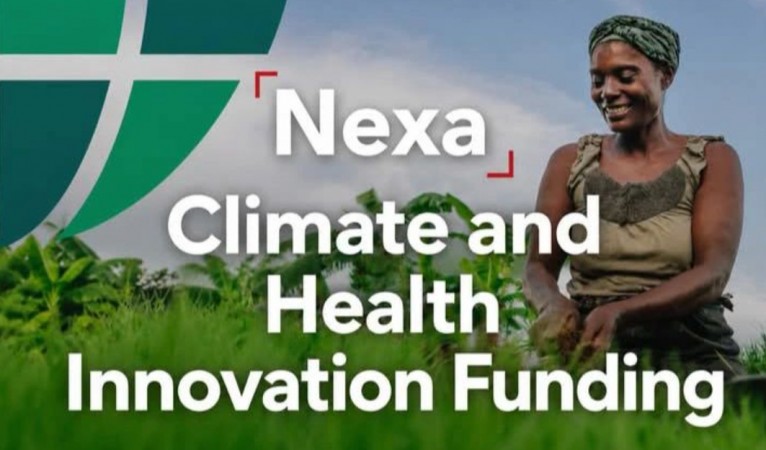
A new international initiative is seeking to transform how low- and middle-income countries respond to the growing health impacts of climate change, with plans to mobilize more than US$50 million to support locally developed solutions across Africa, Latin America, and other vulnerable regions.
Launched during London Climate Action Week, the Nexa initiative brings together a coalition of global health, research, philanthropic, and development organizations around a common goal: accelerating climate-health innovations designed and led by communities on the frontlines of climate change.
The initiative is co-led by Grand Challenges Canada (GCC) and the Science for Africa Foundation (SFA Foundation), alongside partners including the Novo Nordisk Foundation, Sanofi Foundation, the Fund for Innovation in Development, and members of the Global Grand Challenges Network across Africa and other regions.
The launch comes at a time when climate-related health threats are escalating worldwide. Rising temperatures, worsening air pollution, changing disease transmission patterns, and increasingly frequent extreme weather events are placing growing pressure on already stretched health systems, particularly in developing countries.
Rather than focusing solely on emergency response, Nexa aims to strengthen long-term resilience by investing in innovations that help communities anticipate, adapt to, and mitigate climate-related health risks.
“Climate and health are one of the defining challenges of our time, and they will require new models of partnership and investment,” said Dr. Tom Kariuki, Chief Executive Officer of the Science for Africa Foundation.
The initiative places particular emphasis on three rapidly growing climate-linked health challenges: mosquito-borne diseases such as malaria and dengue, extreme heat, and poor air quality.
These threats disproportionately affect vulnerable populations, including children, pregnant women, people living with chronic illnesses, and underserved communities with limited access to healthcare services.
What distinguishes Nexa from many traditional development programmes is its focus on locally led innovation. The initiative seeks to channel resources directly toward innovators, researchers, entrepreneurs, and health practitioners working closest to affected communities.
“Those closest to these challenges are often closest to the solutions,” Dr. Kariuki noted.
The programme will provide catalytic funding for both early-stage and mature innovations. Early-stage projects will be eligible for up to US$200,000 to test and validate new ideas, while more established solutions can receive between US$250,000 and US$2 million to support expansion and large-scale implementation.
Supported innovations may include new technologies, healthcare delivery models, digital tools, community-based interventions, or other approaches capable of strengthening health system resilience while improving health outcomes.
The initiative is informed by one of the largest climate and health consultations ever conducted. Earlier this year, Grand Challenges Canada, the Science for Africa Foundation, and partners surveyed more than 6,400 health workers, researchers, policymakers, innovators, and humanitarian practitioners across 107 low- and middle-income countries to better understand emerging climate-health priorities.
Applications for the first Nexa funding call, focused on Africa and the Americas, will be accepted between June 22 and July 22, 2026. Initial investments are expected to begin in early 2027, with future funding rounds planned for Asia.
Photo courtesy: SFA Foundation
Comment