
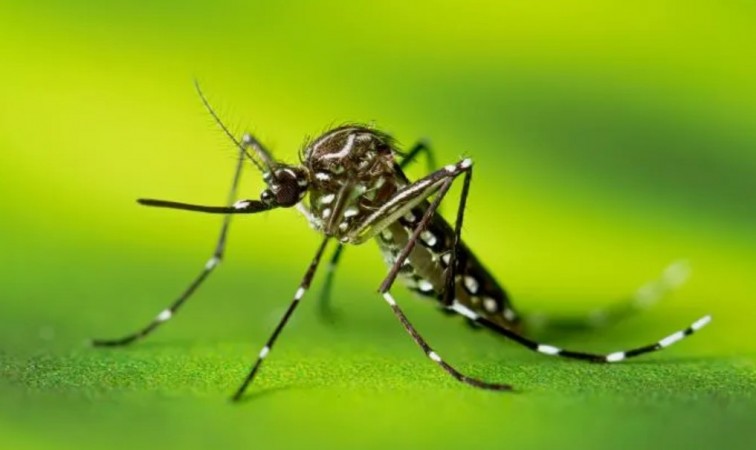
 Image of a Chikungunya causing Mosquito
A new international research initiative is set to advance not only the development of a chikungunya vaccine for African populations, but also the continent's long-term goal of producing more vaccines locally.
The four-year ACT-CHIK (Accelerating Clinical Trials for CHIKungunya Vaccine in Africa) project will evaluate the safety and effectiveness of a promising chikungunya vaccine candidate while laying the groundwork for manufacturing the vaccine in Africa. Coordinated by Institut Pasteur and supported by €15.3 million in funding from the Global Health EDCTP3 Joint Undertaking under the European Union's Horizon Europe programme, the project brings together seven institutions from Africa, Europe, South America, and Asia.
The initiative comes at a time when chikungunya is emerging as a growing public health concern across Africa. The mosquito-borne disease, which causes high fever, severe joint pain, fatigue, and rash, has become increasingly common in recent decades. Climate change, urbanisation, and the expanding range of mosquito vectors are contributing to the risk of more frequent outbreaks.
While chikungunya vaccines have recently entered the market, access remains limited in many endemic countries due to cost and supply challenges. ACT-CHIK aims to address this gap through the development of MV-CHIK, a measles-virus-based vaccine designed with accessibility and local production in mind.
The vaccine candidate has already shown promising safety and immune response results in six early-stage clinical trials involving approximately 600 participants in Europe, the United States, and Puerto Rico. The next phase of research will expand testing to African populations through a large multicountry clinical trial involving 940 adults, adolescents, and children in Rwanda, Kenya, Nigeria, and Senegal.
Beyond clinical testing, ACT-CHIK places a strong emphasis on strengthening Africa's vaccine ecosystem. The project will prepare for the transfer of vaccine manufacturing technology to Institut Pasteur de Dakar in Senegal, currently Africa's only World Health Organization-prequalified vaccine manufacturer. The effort is expected to contribute to the African Union's goal of producing 60 percent of the continent's vaccine needs locally by 2040.
The consortium includes Institut Pasteur (France), the University of Rwanda, Institut Pasteur de Dakar (Senegal), Fundação Oswaldo Cruz (Brazil), Irrua Specialist Teaching Hospital (Nigeria), Kenya Medical Research Institute (KEMRI), and the International Vaccine Institute (South Korea), combining expertise in vaccine development, manufacturing, clinical research, regulation, and public health.
By linking vaccine innovation, clinical research, and local manufacturing capacity, ACT-CHIK aims to strengthen Africa's preparedness against future chikungunya outbreaks while supporting the continent's growing role in global vaccine production.
Image courtesy: CDC
Article by Jed Mwangi
Comment