
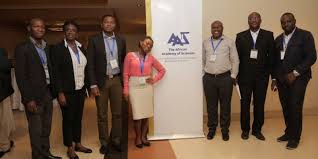
 A past annual DELTAS grantees meeting
The African Academy of Sciences (AAS)’s DELTAS Africa Community in partnership with Public Engagement (CPE) seed fund has awarded thirteen African scientists with funding to implement innovative community and public engagement projects. AAS reports.
The Developing Excellence in Leadership, Training and Science (DELTAs) Africa , is a US$100 million programme of the AAS supporting the Africa-led development of world-class researchers and scientific leaders in Africa, while the CPE seed fund, is a 6-month scheme to support DELTAS Africa doctoral and postdoctoral fellows to implement innovative engagement projects aligned to their research projects. CPE is jointly funded by both the Wellcome Trust and DFID both from the UK.
The funds were presented to the following:
Adebolajo A. Adeyemo, University of Ibadan, Nigeria, (CARTA+); Adeyemo's project will use short drama videos and social media to explore societal engagement in curbing ototoxicity in Nigeria.
Adesola Oluwafunmilola Olumide, University of Ibadan, Nigeria, (CARTA+); Her project will identify feasible actions for promoting senior secondary school retention for adolescents in Nigeria. Since her research findings revealed that adolescents enrolled in secondary school were less likely to engage in health-risk behaviours (cigarette smoking and unsafe sexual practices)
Christian Tetteh Duamor, Nelson Mandela African Institute of Science and Technology, Tanzania, (AFRIQUE One-ASPIRE); Duamor’s project focuses on changing societal perceptions on dogs to improve community participation in dog vaccination campaigns, through community-based accountability meetings and creative arts to curb the rabies menace.
Clement Nhunzvi, University of Zimbabwe, (AMmARI); Nhunzvi’s project will use creative arts and competitions to engage school children (13-18years) in Zimbabwe on issues of social inclusion and stigma complicating prevalent problems of substance abuse and HIV in the community.
Lerato Ndlovu, Africa Health Research Institute, South Africa, (SANTHE); Ndlovu’s project will promote interest in infectious disease research in the neglected rural communities in South Africa through a play.
Lucy Mupfumi, Botswana-Harvard AIDS Institute Partnership, Botswana, (SANTHE); Mupfumi's project will engage adolescents aged 12-19 years in Botswana using story-telling and short ethical documentaries to improve understanding predictors of incident TB in HIV-infected patients.
Motswedi Anderson, Botswana Harvard AIDS Institute Partnership, Botswana, (SANTHE); Her project will engage adults aged 18-40 using participatory arts to evaluate their knowledge and perspectives towards HBV.
Patience Kiyuka, KEMRI-Wellcome Trust Research Programme, Kenya, (IDeAL); Her project will engage children aged 10-14 years using Virtual Reality to inspire young scholars to consider Science, Technology, Engineering and Maths (STEM) careers options.
Primrose Nyamayaro, African Mental Health Research Initiative, Zimbabwe, (AMARI); Her project aims to empower persons living with HIV and their support networks with mental health knowledge to improve their treatment outcomes, as well as develop mental health education awareness messaging materials for dissemination.
Respicius Shumbusho Damian, University of Dar es Salaam, Tanzania, (CARTA+); His project aims to empower rural communities in Tanzania to play an effective oversight role in primary health care to ensure accountability with regards to public resource use and service delivery at community and facility levels through community dialogue meetings and joint learning and reflection sessions.
Sophie Uyoga, KEMRI-Wellcome Trust Research Programme, Kenya, (IDeAL); Her project will use comic books to raise the profile of the social issues and challenges that people living with Sickle cell disease (SCD) undergo.
Trizah Koyi Milugo, International Center of Insect Physiology and Ecology, Kenya, (THRIVE-2); Her project will stimulate high school students’ interest in malaria research through a science-based project competition.
Paul Katongole, Makerere University, Uganda, (MUII Plus); Her project on Anti-Microbial Resistance (AMR) will engage primary school pupils in the basics of microbiology with a focus on how infections are caused, transmitted and how to prevent them.
Photo courtesy of Google
Article by Jedidah Mwangi
https://www.aasciences.ac.ke/news/fresh-ideas-engaging-public-science-funded
Comment