
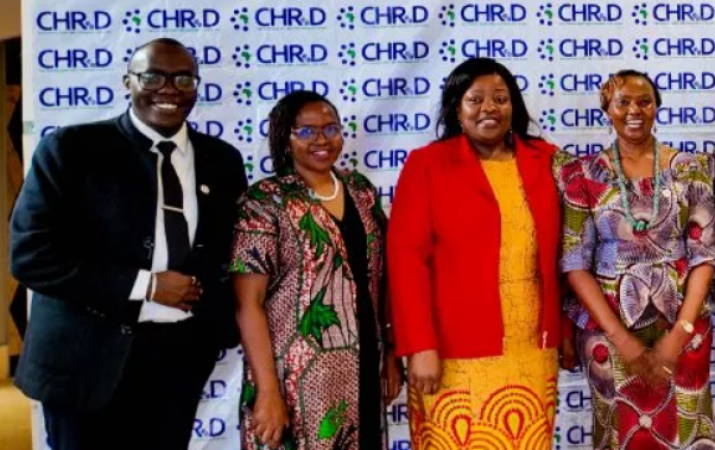
 Participants at the close of the Culture of Science Conference 2026 in Nairobi on Thursday.
African governments have been urged to nearly double their average investment in research and development as the continent seeks to build stronger, more self-reliant science and health systems.
The Coalition for Health Research and Development (CHReaD) made the call as the Culture of Science Conference 2026 ended in Nairobi, warning that limited domestic financing continues to constrain Africa’s ability to generate solutions to its own health and development challenges.
African governments currently spend an average of about 0.5 per cent of GDP on research and development, half the one per cent target set under the African Union’s Algiers Declaration. CHReaD called on governments and Ministries of Finance to close the gap by ring-fencing research and development funding within national budgets.
The coalition also pressed governments to honour the Abuja Declaration commitment to allocate 15 per cent of national budgets to health, noting that only three African countries currently meet the target. Greater domestic investment, it argued, is needed to reduce dependence on external funding and give African researchers greater capacity to set and pursue the continent’s own priorities.
The financing push extends beyond research laboratories to the production of medicines and medical technologies. CHReaD called for pharmaceutical manufacturers, AUDA-NEPAD and procurement partners to work towards producing 50 per cent of Africa’s pharmaceutical needs locally by 2030, alongside increasing local procurement of priority diagnostics and medical devices to 25 per cent.
The coalition also identified Africa’s shortage of scientific talent as a major constraint, calling for the continent’s research workforce to reach 500 researchers per million people. Expanding that workforce would be critical to translating increased investment into discoveries, technologies and health products developed on the continent.
Regulatory capacity was another priority. CHReaD urged African Union member states and the African Medicines Agency to complete the integration of harmonised regulatory standards across Regional Economic Communities by 2030, while calling for functional national regulatory authorities across all AU states and at least 10 to reach WHO Maturity Level 3.
The conference also highlighted the need for regulation to keep pace with emerging technologies. Health-focused regulatory sandboxes were proposed to allow innovators to test artificial intelligence, digital health and biotechnology solutions in controlled environments before wider deployment.
CHReaD further called for stronger collaboration between governments, the private sector, philanthropists and foundations to coordinate investment in health research and innovation. It also urged media and science communicators to maintain the science journalism engagement launched during the conference through monthly activities from 2027.
Held in Nairobi from September 8–10 under the theme “Shaping Africa’s Future through Science,” the conference brought together policymakers, researchers, financiers, regulators, innovators, educators, youth, media and civil society. Its recommendations place financing, local production, scientific talent and regulatory capacity at the centre of Africa’s push to turn scientific ambition into greater self-reliance.
Article by Jed Mwangi
Photo courtesy: The Star
https://www.the-star.co.ke/news/2026-09-10-african-governments-urged-to-boost-research-funding
Comment