
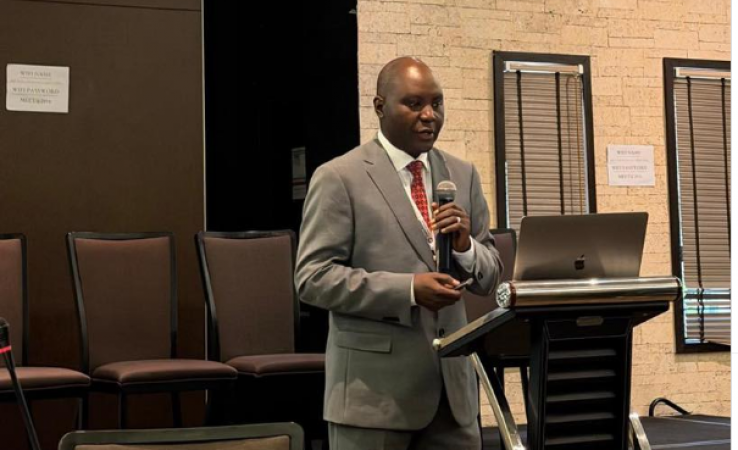
 Photo of Professor Wilbroad Mutale who delivered the keynote, “A Vision for Cancer Research Training in Africa,” highlighting the need to expand cancer research training and capacity across the continent.
Africa is seeking to shift the balance of power in cancer research, with scientists and policymakers calling for African institutions to move beyond supplying data and biological samples to leading the questions, studies and investments that shape the continent’s cancer response.
The call emerged from the Future of Cancer Research in Africa Summit, held in Nairobi on September 3–4, where researchers, government representatives, industry and non-profit organisations examined how to build a more sustainable, Africa-led cancer research system.
Cancer is becoming an increasingly urgent public health challenge as Africa’s populations grow older, urbanise and experience changing lifestyles. Cancer deaths on the continent are projected to rise sharply over the coming decades, increasing pressure on health systems already dealing with infectious diseases and other health priorities.
The African Academy of Sciences (AAS), which convened the summit, argued that the changing disease burden requires a corresponding shift in research priorities. African scientists need greater control over research questions, data, biological samples, ethical frameworks and the translation of scientific findings into health policies and technologies.
Professor Nkem Khumbah, AAS Director for STI Policy and Partnerships, said African institutions must have the resources to investigate questions relevant to their populations, while scientific expertise needs to be connected more closely with the people responsible for policy and investment decisions.
The challenge is not simply a shortage of scientific talent. Africa has expanding research institutions and centres of excellence, but researchers continue to face limited financing, fragmented infrastructure, restricted access to technology and insufficient opportunities for sustained careers.
Dr Catherine Kyobutungi of the Africa Population and Health Research Center highlighted the continent’s continued dependence on external funding and uneven research capacity. She called for investment across the entire research ecosystem, including researchers, mentors, laboratories, cancer registries, research managers and data infrastructure.
Participants also examined how international partnerships could support rather than displace African leadership. The discussions pointed to shared governance, equitable financing, responsible management of data and biological samples, fair recognition of African researchers and long-term investment in local institutions as elements of a different partnership model.
The summit brought together experts in cancer biology, epidemiology, prevention, genomics and technology for early detection. AAS Fellows including Kunle Odunsi, Sharon Prince, Sunday Ene-Ojo Atawodi, Akindele Olupelumi Adebiyi and Kyobutungi contributed to discussions on building sustainable research capacity.
The meeting also sought to connect research more directly to implementation. Working groups examined institutional barriers, financing options, potential partners and reforms needed to translate evidence into national cancer strategies and measurable interventions.
The AAS plans to use the discussions to develop a shared research agenda, policy brief, white paper, working-group mandates and partnership commitments. The objective is to move cancer research from fragmented projects towards nationally and regionally connected systems capable of generating evidence, informing policy and sustaining African scientific leadership.
Article by Jed Mwangi
photo courtesy:teledoctorzm
Comment