
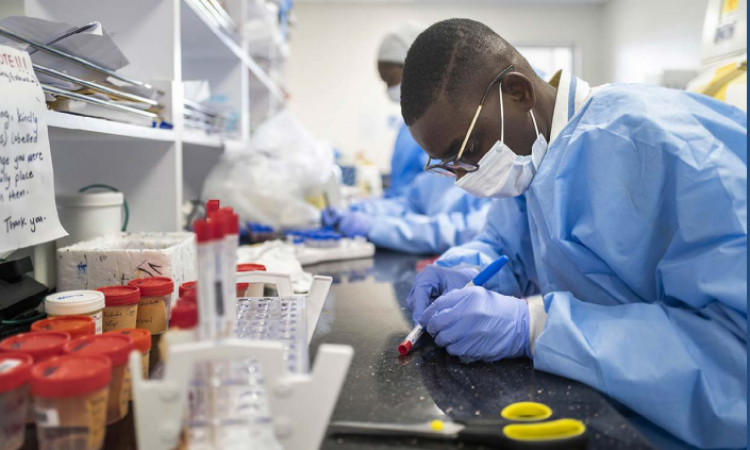
African researchers are set to gain greater control over the tools used to investigate some of the continent’s most persistent infectious diseases under a new £4.4 million programme led by the University of Cape Town (UCT).
The four-year openScopes AIDDiA programme will deploy advanced, open-source light microscopes at research institutions in South Africa, Kenya, Uganda and Côte d’Ivoire, allowing scientists to study pathogens closer to the communities where diseases are most prevalent.
Funded by the Wellcome Trust through its Bioimaging Technology Development Awards, the initiative brings together UCT, the Kenya Medical Research Institute (KEMRI), Mbarara University of Science and Technology (MUST), the Centre Suisse de Recherches Scientifiques and Imperial College London. It is the only one of nine projects in the latest funding round to be led from outside the United Kingdom.
The consortium will focus on tuberculosis, malaria, Buruli ulcer and other neglected and emerging infections. Together, these diseases account for more than 292 million cases and 1.7 million deaths globally, with more than 90 per cent of cases occurring in Africa, according to a 2024 World Health Organization report.
Yet researchers closest to affected communities often lack the sophisticated imaging tools required to study how pathogens behave, persist and develop resistance to treatment. Samples collected in Africa may consequently be sent to better-resourced laboratories elsewhere, leaving local scientists heavily involved in sample collection but with fewer opportunities to lead discovery research.
Dr Caron Jacobs, who co-leads the consortium with Professor Digby Warner at UCT’s Institute of Infectious Disease and Molecular Medicine, said placing imaging capabilities where patients are could enable African scientists to lead research into diseases affecting their communities.
The programme will deploy two open-source microscopy platforms whose designs can be freely accessed, allowing researchers to build, repair and modify equipment locally. Mobile travellerScopes will extend access between research sites, while more advanced microbeScopes will be installed at four African partner institutions.
The initiative also recognises that scientific equipment must work within local conditions. Researchers will develop methods suited to challenges including unreliable electricity, limited cold storage and restricted access to imported biological supplies, while training materials will be produced in English and French.
Beyond hardware, the consortium will build shared systems for handling and analysing imaging data, including machine-learning tools. William Wasswa of MUST said the programme is developing data pipelines and analytical tools alongside the microscopes because the value of imaging depends on what researchers can extract from the resulting data.
Tuberculosis will provide an early test, with researchers in South Africa and Kenya using the technology to examine drug-resistant bacteria in patient samples at individual-cell level. High-containment facilities at UCT and KEMRI will support work with live infectious pathogens.
The programme builds on the openFrame open-source microscope system developed with Imperial, with earlier Wellcome funding supporting prototypes. Its longer-term goal is to establish a self-sustaining African bioimaging network, leaving behind technical expertise, infrastructure and collaborative capacity after the grant ends.
Article by Jed Mwangi
Photo courtesy: Google
Comment