
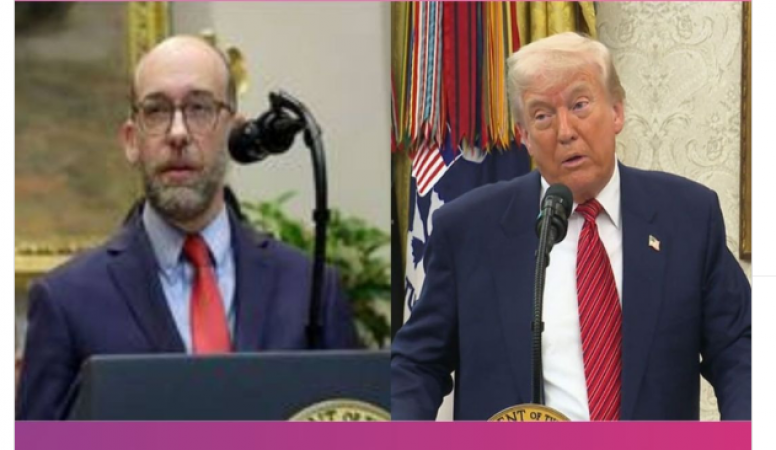
The Trump administration is considering giving the White House greater influence over how the US National Institutes of Health (NIH) awards research grants, raising questions about the future of scientific decision-making at the country’s largest biomedical research funding agency.
According to reports by US media outlets, President Donald Trump discussed the proposal during an Oval Office meeting with Office of Management and Budget Director Russell Vought and NIH Director Jay Bhattacharya.
Vought reportedly argued that some NIH-funded projects do not reflect the administration’s priorities and proposed additional scrutiny of grant awards. One option under discussion is a commission or board that would review funding decisions before they are approved, with Vought and Bhattacharya among its potential members and unanimity reportedly required for awards.
The proposal would represent a significant change in how federal biomedical research funding is overseen.
NIH currently operates with a budget of roughly $47 billion in annual funding and is the largest source of biomedical research support for US colleges and universities, making its grant decisions important not only to researchers but also to universities, laboratories and the broader health research sector.
Bhattacharya reportedly defended the agency’s existing grant-review process during the meeting. The discussion comes amid an escalating dispute over how the administration has reviewed and cancelled research grants, including projects involving diverse communities, women’s health and transgender issues.
A group of researchers has also sued NIH over a grant-screening process that allegedly used specific keywords to identify awards for additional review. The researchers argue that the system amounts to viewpoint discrimination, adding a legal challenge to an already contentious debate over federal research funding.
The proposed executive order would come as the administration faces limits on another effort to increase political involvement in grant decisions. Congress has temporarily blocked the administration’s broader plan to give political appointees a greater role in awarding federal research grants, with the Office of Management and Budget unable to finalise the proposal until at least mid-December.
The potential NIH order could provide the administration with a separate mechanism for influencing funding decisions while that broader proposal remains constrained.
The debate is also unfolding against the backdrop of the administration’s long-running dispute with Harvard University over federal research funding. Politico reported that the proposed changes could provide another avenue for the administration to restrict funding to the university.
A federal district judge ruled in September 2025 that the administration had unlawfully frozen more than $2 billion in Harvard’s federal research funding and ordered the money restored. The administration appealed the ruling, with oral arguments expected next month.
Beyond the immediate political and legal disputes, the proposed changes could affect how researchers, universities and funding agencies view the independence of the US biomedical research system. Greater political review could alter the relationship between scientific peer review and government priorities, with implications for which areas of research receive federal support.
Article by Jed Mwangi
photo courtesy:Google
https://www.cidrap.umn.edu/public-health/trump-pushes-more-control-over-nih-research-dollars
Comment