
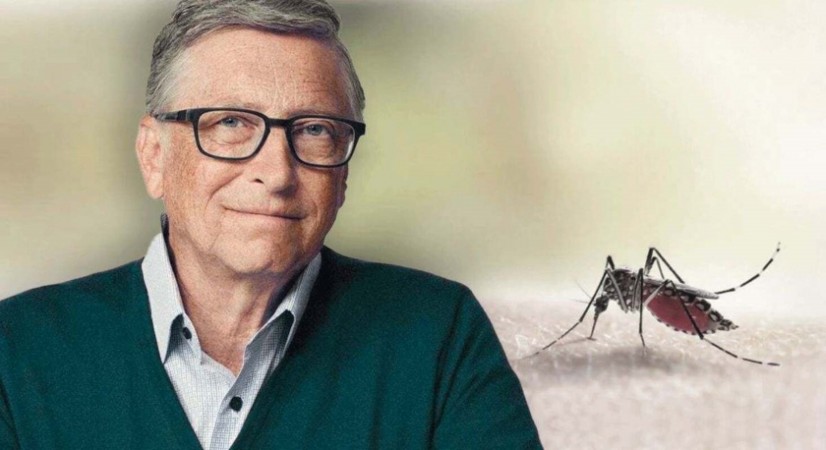
Burkina Faso has officially terminated a decade-long genetically modified mosquito experiment funded by the Bill & Melinda Gates Foundation, citing unresolved biosafety concerns and the need to safeguard national sovereignty in scientific research.
The decision halts the work of Target Malaria, a multinational consortium of African and European researchers that, since 2012, had used Burkina Faso as a test site for experimental “gene-drive” technology aimed at suppressing malaria-carrying mosquito populations. On Monday, authorities ordered all facilities housing genetically modified mosquitoes sealed and remaining samples destroyed under state supervision.
The announcement came just weeks after the project’s latest trial involving the release of sterile male mosquitoes, part of an effort to reduce malaria transmission by shrinking mosquito reproduction rates. Burkina Faso became the first African nation to authorise such a release in 2019.
While advocates have hailed the technology as a potential breakthrough against malaria—responsible for over half a million deaths annually in Africa—critics have long raised alarms about ecological risks, weak community consent, and ethical implications.
“The technology is highly controversial and unpredictable,” said Ali Tapsoba, spokesperson for the Coalition for Monitoring Biotechnological Activities in Burkina Faso (CVAB). “We must prioritise alternatives that are proven safe.”
Target Malaria defended its record, insisting it had complied fully with national laws. “The project has been operating in accordance with Burkina Faso’s regulatory framework and remains ready to cooperate with authorities,” the consortium said in a statement.
The suspension also reflects the government’s growing assertiveness under Captain Ibrahim Traoré, which has tightened oversight of international NGOs and revoked more than 20 foreign-funded organisations’ licenses since June. Officials framed the move as both scientific caution and a statement of independence.
“Burkina Faso will continue to lead in the fight against malaria,” the Ministry of Higher Education, Research and Innovation said, “but through methods that respect biosafety standards and national sovereignty.”
Malaria remains the country’s deadliest public health threat. UNICEF reported more than 10.2 million cases and 5,200 deaths in 2023, with children under five the most vulnerable.
Despite halting the gene-drive programme, authorities reaffirmed their commitment to combating malaria through newly approved vaccines such as RTS, S and R21/Matrix-M, alongside mass distribution of insecticide-treated nets, seasonal chemoprevention, and expanded research through local institutions, including the National Centre for Malaria Research.
Once seen as a pioneer in experimental mosquito control, Burkina Faso is now shifting toward what leaders describe as “safer, locally grounded approaches” in its war against malaria.
Article by Nyokabi Wanjiku
Photo/Google
Comment