
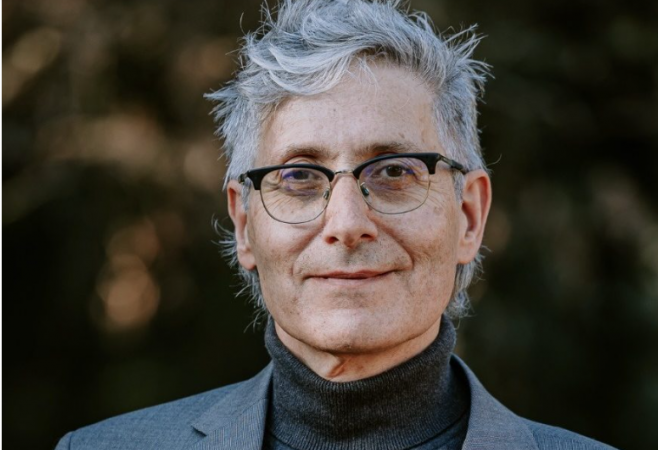
 Photo of prof Clive Gray, proffesor of immunology in the faculty of medicine and health sciences in Stellenbosch university
A South African scientist’s two-decade effort to strengthen immunology research capacity across Africa has earned international recognition, with Stellenbosch University professor Clive Gray receiving the Royal Society Africa Prize.
Gray, professor of immunology at Stellenbosch University’s Faculty of Medicine and Health Sciences, was recognised by the UK’s Royal Society for research into the effects of HIV on maternal and child health and his contribution to developing scientific capacity on the continent.
The award comes as Gray’s research increasingly focuses on children who are exposed to HIV during pregnancy but remain uninfected. Despite being HIV-negative, HIV-exposed uninfected children can face higher risks of infections and poorer health outcomes than children born to mothers without HIV.
Gray is investigating whether changes in the placenta caused by maternal HIV infection and inflammation can disrupt the immune relationship between mother and foetus, potentially contributing to poor outcomes in newborns. His next phase of research will seek an antenatal predictor of placental imbalance associated with pre-term birth, while also examining possible links between placental disturbances and cardiovascular disease in mothers.
The Royal Society Africa Prize provides £15,000 for the winning research project and a personal award of £2,000. For Gray, however, its significance extends beyond the funding, highlighting a model of African science that combines research with training and mentorship.
Since 2007, Gray has trained nearly 400 young scientists in areas including HIV, tuberculosis, malaria, COVID-19 and vaccine design. He also established the Reproductive Immunology Research Consortium in Africa (RIRCA), bringing together immunologists and paediatricians studying maternal HIV, antiretroviral therapy, newborn immune responses and paediatric vaccines.
Through RIRCA, Gray has helped build a collaborative research network linking scientists and students in South Africa and across the continent with international partners. He has also founded Immunopaedia, which provides free online immunology courses to students and researchers.
Gray has published more than 140 papers during a career spanning over 25 years, with his work increasingly centred on reproductive and cellular immunology.
His recognition comes as African countries continue to carry a disproportionate share of the global HIV burden, while research capacity remains uneven across the continent. By combining laboratory research with the training of African scientists, Gray’s work seeks to ensure that expertise needed to address these challenges is developed within Africa.
Gray said he was “completely surprised” by the award, describing it as recognition of the collective work of RIRCA and its wider research network.
He said the prize was also an affirmation of the growing international influence of African science and expressed hope that it would encourage young researchers to believe that world-leading research can be conducted from the continent and have global impact.
The Royal Society Africa Prize is among 27 medals and awards presented by the UK academy this year for contributions to scientific discovery, public engagement and research culture.
Article by Jed Mwangi
Photo courtesy:
Comment