
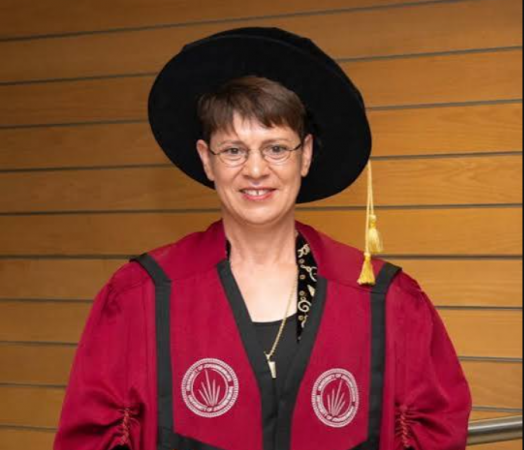
 Image of Professor Hassina Mouri.She is a prominent geologist and UNESCO Chair on Medical Geology in Africa at the University of Johannesburg (UJ). She made history as the first female and first African geoscientist to be elected President of the International Union of Geological Sciences
Africa's growing influence in environmental health research has received a significant international endorsement after UNESCO renewed the University of Johannesburg's UNESCO Chair on Medical Geology in Africa until 31 December 2030, extending one of the continent's most important scientific platforms for tackling health risks linked to the environment.
The renewed mandate reinforces Africa's expanding role in generating evidence on how geological and environmental conditions affect public health while strengthening collaboration between African researchers, governments and international scientific institutions.
Originally established in 2022, the UNESCO Chair became the first in the world dedicated specifically to Medical Geology in Africa, positioning the continent at the forefront of a rapidly evolving scientific discipline. Led by internationally recognised geoscientist Professor Hassina Mouri, the Chair has become a focal point for interdisciplinary research addressing some of Africa's most pressing environmental and public health challenges.
Medical geology investigates how naturally occurring elements and minerals found in soil, rocks, groundwater and air influence the health of humans, animals and ecosystems. The field provides critical scientific evidence for addressing challenges such as groundwater contamination, exposure to toxic metals, mineral deficiencies, environmental pollution and other geo-environmental hazards that affect millions of people across Africa.
The renewed UNESCO designation enables the Chair to expand its work in interdisciplinary research, postgraduate education, scientific training and community engagement, while deepening partnerships with universities and research institutions across Africa and beyond. It also aligns with UNESCO's Priority Africa agenda by promoting open science, knowledge sharing and equitable international collaboration.
University of Johannesburg Vice-Chancellor and Principal Professor Letlhokwa Mpedi described the renewal as international recognition of the University's research excellence and its commitment to producing knowledge that addresses complex societal challenges.
Professor Hassina Mouri said the extended mandate creates new opportunities to strengthen continental scientific collaboration and develop locally driven solutions to environmental health problems affecting African populations.
UNESCO has also encouraged the Chair to broaden its collaboration with African institutions, expand community outreach and make research outputs and educational resources more widely accessible to scientists, policymakers and communities.
The renewal further enhances UJ's international research standing. The university now hosts four UNESCO Chairs covering values education, medical geology, mental health and psychosocial support, and cultural inclusivity and equity in digital media, reflecting growing recognition of African expertise across multiple scientific disciplines.
The UNESCO Chairs Programme currently connects more than 1,000 Chairs and UNITWIN Networks in over 120 countries, fostering international cooperation in research and higher education.
Photo courtesy : University of Johannesburg
Article by Jed Mwangi
Comment