
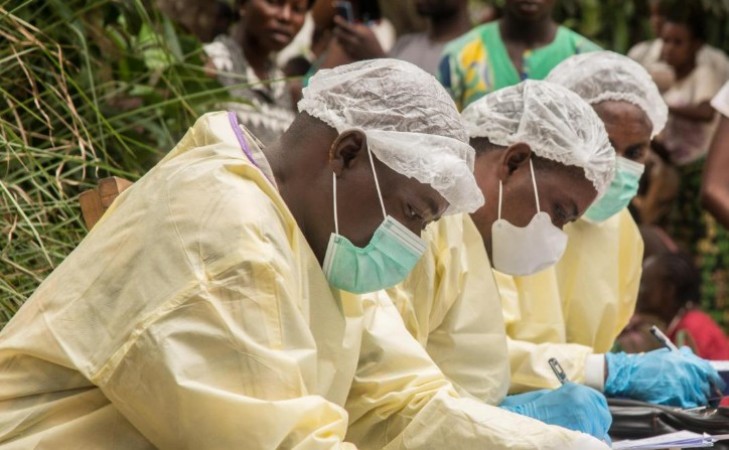
The African Union and the European Commission have unveiled a €100 million package of joint initiatives aimed at strengthening health systems across Africa, signaling a deepening strategic partnership focused on preparedness, resilience, and long-term health sovereignty.
The funding is structured across three complementary programmes designed to address systemic gaps exposed by recent global health crises. Together, they reflect a shift toward more integrated, forward-looking approaches that link surveillance, workforce development, and digital innovation.
The first initiative focuses on strengthening national public health institutes in 10 African countries, enhancing their capacity in disease surveillance, early warning systems, laboratory services, and emergency response. This investment is expected to improve how countries detect and respond to outbreaks before they escalate into wider crises.
A second programme targets the growing global threat of antimicrobial resistance (AMR), advancing a “One Health” approach that connects human, animal, and environmental health systems. The initiative, announced earlier this month at the One Health Summit, also prioritizes workforce development, equipping professionals with the skills needed to detect and prevent cross-sector health risks.
The third pillar centers on expanding digital health solutions in six African countries, with a focus on strengthening pandemic preparedness and reinforcing primary healthcare systems. By leveraging technology, the programme aims to improve data systems, coordination, and service delivery at both national and community levels.
The initiatives were formally launched at the African Union headquarters by Jozef Síkela and Jean Kaseya, whose institution, the Africa Centres for Disease Control and Prevention, will serve as the operational partner.
Síkela framed the investment as both a strategic and global imperative, emphasizing that health security is increasingly intertwined with economic stability and geopolitical resilience. He noted that strengthening health systems is not simply a development priority, but a necessary safeguard against future global disruptions.
From the African perspective, the initiative aligns with broader ambitions to reduce external dependency and build stronger, self-sustaining health systems. Kaseya highlighted that the partnership supports Africa’s Health Security and Sovereignty Agenda by enabling countries to better finance, manage, and deliver their own health priorities.
The collaboration also signals continued momentum toward deeper Africa–Europe cooperation in health innovation. Plans are underway to launch a broader global health resilience initiative, which will integrate research, medical technology, and regulatory coordination to strengthen systems worldwide.
European investment in local manufacturing of vaccines and medicines is expected to form a key component of this effort, addressing one of the most critical lessons from recent pandemics, the risks associated with over-reliance on external supply chains.
Photo courtesy / WHO
Article by Jed Mwangi
Comment